Picture a long wooden table, a cold imported beer in a heavy stein, brass music in the background, and plates arriving hot from the kitchen with roasted meats, crisp potato sides, and pretzels the size of your hand. If you’ve ever asked what is traditional Bavarian food, the answer starts there – with food made to bring people together.
Traditional Bavarian food is hearty, deeply regional, and built for celebration. It comes from southern Germany, where alpine weather, farming traditions, and beer culture shaped a cuisine that values comfort, craftsmanship, and big flavor over delicate presentation. This is food meant to be shared in beer halls, enjoyed at festivals, and remembered long after the last toast.
What Is Traditional Bavarian Food Made Of?
Bavarian cooking is rooted in ingredients that made sense for the region: pork, beef, veal, poultry, potatoes, cabbage, flour, dairy, and bread. The flavors are rich but not fussy. You’ll see mustard, horseradish, caraway, parsley, chives, onions, and slow-cooked gravies show up again and again. The food is satisfying, but the best versions never feel random or heavy for the sake of being heavy. There’s structure to it.
Bavaria is also inseparable from beer. Not just as a drink, but as part of the table. Beer hall food evolved to complement malty lagers, crisp wheat beers, and the easy rhythm of social dining. Salty pretzels, roasted pork, sausages, schnitzel, and tangy sides all play well with a stein in hand. That pairing is part of the tradition, not an afterthought.
The Dishes That Define Traditional Bavarian Food
If you want to understand what traditional Bavarian food looks like on the plate, start with the classics that locals and travelers recognize instantly.
Pretzels and Beer Hall Starters
A giant Bavarian pretzel is more than a snack. It sets the tone. The dark crust, soft interior, and hit of salt are designed for communal eating and beer-friendly flavor. Served with sweet mustard, beer cheese, or both, a proper pretzel announces that this meal is going to be generous.
You’ll also find starters built around sausages, spreads, pickles, and rustic breads. Obatzda, a seasoned cheese spread made with soft cheese, butter, paprika, and onion, is a classic beer garden staple. It’s rich, a little sharp, and made to wake up your appetite.
Sausages, Especially Weisswurst and Bratwurst
Bavaria takes sausages seriously. This is not a side note in the cuisine. It’s one of its core expressions.
Weisswurst is among the most traditional. Made from finely minced veal and pork back bacon, then seasoned with parsley, lemon, mace, onions, and cardamom, it has a pale color and delicate texture. It’s typically served with sweet mustard and pretzels. Compared with a grilled bratwurst, weisswurst is softer and more subtle. That matters because Bavarian food is not always about intensity. Sometimes the appeal is balance.
Bratwurst and other sausages bring a more direct, savory punch. Depending on the preparation, they may be grilled until snappy, pan-seared, or served with sauerkraut and potatoes. In a beer hall setting, sausages are a natural fit because they’re satisfying without slowing down the table.
Schnitzel and Breaded Cutlets
Schnitzel is often associated with Vienna, but it has a comfortable home on Bavarian menus too. A thin cutlet, usually pork or veal, is breaded and fried until crisp and golden. The texture contrast is the whole point – crunchy outside, tender inside, often served with lemon, potatoes, or salad.
This is one of those dishes that looks simple but depends on execution. Too thick, and it loses its elegance. Too greasy, and it becomes a chore. Done right, schnitzel is one of the liveliest plates on the table.
Schweinshaxe and Roast Pork
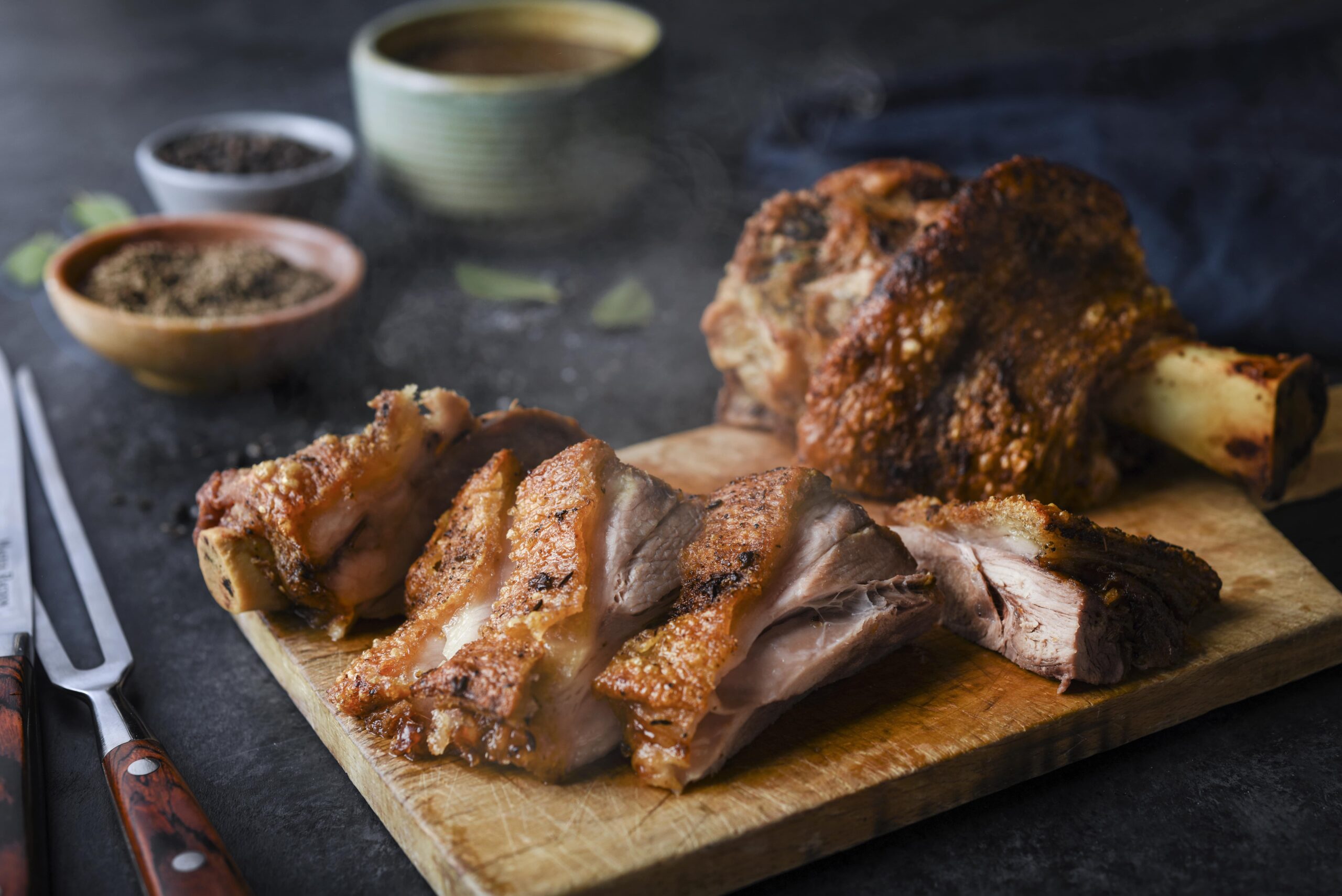
If there is a showstopper in traditional Bavarian food, it might be roast pork in one form or another. Schweinshaxe, the roasted pork knuckle, is famous for its crackling skin, tender meat, and dramatic presentation. It feels celebratory because it is celebratory.
You’ll also see pork roast served with dark beer gravy, red cabbage, or potato dumplings. This is where Bavarian food really shows its old-world confidence. It doesn’t chase trends. It delivers deep flavor, patience, and the kind of comfort that fills a room with approval the moment plates hit the table.
Potato Pancakes, Dumplings, and Hearty Sides
Sides matter in Bavaria. They don’t just fill space on the plate. They complete the dish.
Potato pancakes bring crisp edges and a soft center, often with applesauce or savory pairings. Potato dumplings and bread dumplings soak up gravy and add substance to roast meats. Sauerkraut, red cabbage, and warm potato salad offer contrast – tang, sweetness, or gentle acidity to balance richer proteins.
That balance is worth noticing. People who assume Bavarian food is all weight and no nuance usually haven’t had a well-composed plate. The cabbage brightens. The mustard cuts through. The dumpling steadies the whole experience.
What Makes Bavarian Food Different From Other German Food?
Germany has strong regional cooking traditions, so not every German dish is Bavarian. Bavarian food tends to be more aligned with beer hall culture, southern alpine ingredients, and a festive, communal style of eating. It leans into roasted meats, sausages, dumplings, pretzels, and wheat beer pairings in a way that feels distinct.
Northern German cuisine often brings in more seafood and different bread traditions. Other regions may emphasize smoked meats, spicier sausage profiles, or different starches. Even within Bavaria, menus can vary from city to countryside. So if someone asks what is traditional Bavarian food, the honest answer is not one single plate. It’s a recognizable family of dishes tied together by hospitality, seasonality, and regional pride.
Why Beer Hall Culture Matters to the Food
Traditional Bavarian food makes the most sense when you see it in its natural habitat: a lively table. These dishes were not designed for quiet, tiny portions. They were made for gatherings, music, toasts, and another round.
That’s why the atmosphere matters so much. A pretzel tastes different when it arrives warm to a table full of friends. A sausage platter lands better when everyone is passing mustard and raising steins. The food has built-in momentum. It invites conversation.
This is also why authenticity matters. When a restaurant treats Bavarian cuisine as costume instead of culture, the food can feel one-note. But when the kitchen respects traditional preparation, imported beer, and the social rhythm of a real beer hall, the experience clicks. That’s the magic people respond to at Hofbräuhaus Las Vegas – not just a menu, but the full Bavarian spirit around it.
What Is Traditional Bavarian Food for First-Time Diners?
If you’re new to the cuisine, start with the dishes that show off its range. A large pretzel with mustard gives you the beer hall welcome. A weisswurst or bratwurst plate introduces the sausage tradition. Schnitzel brings crisp comfort. Roast pork or pork knuckle delivers the dramatic centerpiece. Add a side like potato pancakes, dumplings, or sauerkraut, and you’ll start to understand how the table comes together.
The best order depends on what kind of eater you are. If you want something approachable, schnitzel is an easy first choice. If you want the most classic beer hall experience, sausage and pretzel might be the move. If you came hungry and want the full Bavarian feast, roast pork is hard to beat.
Dessert can also be part of the story, though it doesn’t always get top billing. Apple strudel and other baked sweets reflect the same comfort-first tradition found in the savory dishes.
Traditional Bavarian Food Is About More Than Heaviness
One of the biggest misunderstandings about Bavarian cuisine is that it’s just heavy food. It can be rich, yes, but richness is only part of the appeal. The real signature is generosity. These are dishes with history, shaped by region and ritual, and meant to create a good time around the table.
That’s why they’ve lasted. A great Bavarian meal gives you crunch, salt, smoke, tang, warmth, and the kind of satisfaction that feels festive rather than excessive. It’s food with personality. Food that knows exactly what it is.
If you’re curious about Bavaria, start with the plate and the stein. Traditional Bavarian food tells its story in every pretzel tear, every crisp bite of schnitzel, and every slow-roasted slice of pork – and it always tastes better when shared.